Picking a platform to sell digital products? Check these 8 things first
15 August 2026 · 7 min read

You have probably had this tab open for a week. Search the question and you get twenty listicles, most of them ranking whoever paid for the placement, and every one of them tells you something different. So here is the other thing instead. The checklist we would use ourselves, and an honest note at the end about where Creatly fits, including when it is not the right pick.
One idea underneath all of it: rails beat features. Nearly every platform can host a PDF and take a payment. What separates them is whether the money and the delivery run on the rails your buyers actually use, or on rails borrowed from an audience that is not yours.
Why choosing a platform is so confusing

The confusion is manufactured, and not by accident. Feature lists are built to look impressive and to bury the two or three things that actually decide whether you get paid. Unlimited products. Advanced analytics. Custom domains. All lovely, none of them the reason a sale succeeds or dies.
You could spend another week comparing grids. Or you could ignore the grids entirely and put every option through the same eight questions below, which take about ten minutes and are considerably harder to fake.
The eight things that decide it
- 01
UPI at checkout, not as an option but as the default
Your buyer is on a phone with GPay or PhonePe open in the next tab. If the payment screen asks for a card number first, you have lost most of them, and you will never hear why. Test it yourself: open your own checkout on your phone and try to pay in under thirty seconds. If you can't, your buyers can't.
- 02
Money in, money out, no detours
The price your buyer sees, the receipt they get and the payout that reaches your bank should all be the same currency. Every conversion in between takes a spread and adds paperwork you did not sign up for.
- 03
You only pay when you actually sell
A flat monthly subscription is a bill that arrives whether you had a good month or not, which is brutal when you are starting. A per-sale fee scales with you. The right platform lets you begin at zero and move to a subscription later, once a lower percentage genuinely saves you money.
- 04
Delivery on WhatsApp, automatically
The gap between 'payment done' and 'file received' is where trust is won or lost. It should be seconds, it should need nothing from you, and it should not depend on someone checking their email.
- 05
Room for what you'll sell next year
Today it's a PDF. In six months it might be a course with lessons and progress tracking, paid 1:1 calls from your calendar, or a members-only Telegram group that adds and removes people on its own. Migrating platforms later is painful, so check the ceiling before you start rather than after.
- 06
Buyers can help themselves
Without buyer accounts, every lost download link becomes a DM you have to answer personally. With them, people log in and get their own files, forever. This one quietly decides whether selling stays fun at a hundred customers.
- 07
Something that brings buyers in
A storefront is passive; it waits. What actually moves sales is automation on the platform where your audience already is. Someone comments on a reel and gets the link by DM in seconds. If your store and your Instagram automation are different tools, you can never tell which post made the money.
- 08
No lock-in, and your customer list is yours
You should be able to export your customers and walk away whenever you like. A platform that holds your buyer list hostage is charging you a switching cost it never disclosed.
How to test any platform in ten minutes
- Make a free account and list one ₹10 product. If that takes more than ten minutes, imagine onboarding a course.
- Buy it yourself from your phone, on mobile data, paying by UPI. Time it. Count the taps.
- See what arrives, and where. Seconds or minutes? WhatsApp or a Promotions-tab email?
- Find the export button for your customer list. If there isn’t one, you now know what leaving will cost.
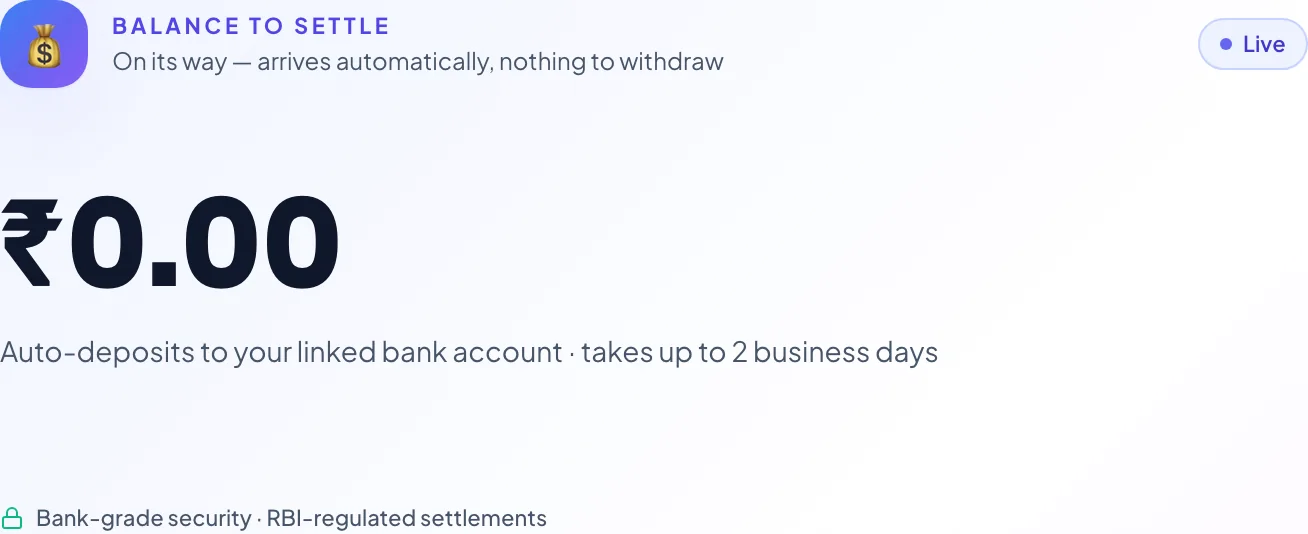
A fifth test worth two minutes: find out when the money reaches your bank, and whether you have to ask for it. A platform that makes you request your own money on a monthly cycle has told you something about how it thinks.
Do this on any two platforms and the decision usually makes itself, with no listicle required. It is also faster than the week you were about to spend reading comparison posts written by people who have never sold a PDF to anyone.
Where Creatly fits, and where it does not
We built Creatly against exactly the list above. Checkout takes cards, UPI and EMI, so most buyers can pay the way they already do. Payouts land in your bank in T+2 days. Orders are delivered on WhatsApp on paid plans, with email on Free, and every buyer gets an account for re-downloads. One store link carries downloads, courses with progress tracking, paid bookings, webinars and memberships that manage Telegram and Discord access on their own. Instagram AutoDM is built in on every plan, including Free, so the reel and the sale are finally the same system. And the Free plan is ₹0 forever, with a 6% fee only when a sale actually happens.
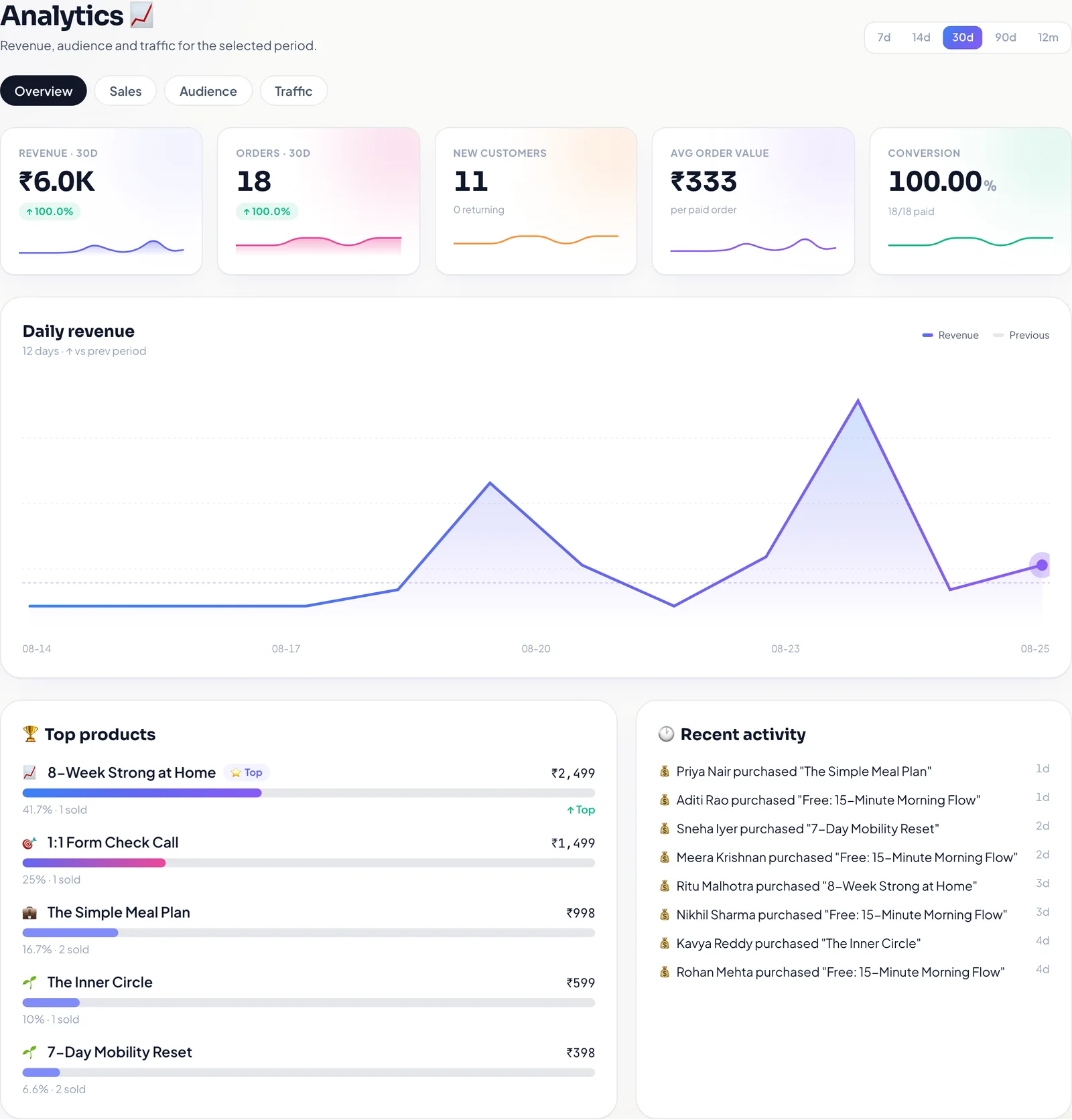
Point four on the list, knowing what is working, is the one people skip while comparing and regret later. You want to open one screen and see what sold, which product carries the month, and who bought in the last few days.
The honest counter case, same as the FAQ below. If what you sell is not really a digital product, a course, a booking or a membership, then a storefront built for those is the wrong tool and you should use something shaped for your business. We would rather say that than win a signup that churns in a month.
Frequently asked questions
What should I look for in a platform to sell digital products?
Eight things, in this order. A checkout offering the payment methods your buyers actually use, payouts straight to your bank account, automatic delivery somewhere they will open, a fee you only pay when you actually sell, support for every product type you might add later (files, courses, bookings, memberships), a way for buyers to re-download without messaging you, tools that bring traffic in (like Instagram comment-to-DM automation), and no lock-in.
Why does the checkout method matter so much?
Because your buyers already have a way they pay for everything else. A checkout that leads with something unfamiliar loses them at the last step, and they do not tell you, they just close the tab. If their normal payment method is not the first option on the screen, nothing else about the platform matters.
Is a monthly subscription or a per-sale fee better?
If you are starting out, a per sale fee is safer, because you pay nothing in a month where you sell nothing. A subscription only wins once your sales are steady and predictable, because a flat fee on high volume costs less than a percentage. The honest test is to work out your platform fee at your current monthly sales, both ways, and pick the smaller number. Creatly is built for exactly this, with free forever at a 6% fee per sale, then ₹499/month at 2% on Pro, then ₹999/month at 0% (up to ₹1,00,000 of sales a month, 0.5% after) on Pro+.
Why deliver on WhatsApp instead of email?
Open rates. An email delivery often lands in Promotions and stays unread, and you end up manually resending files. WhatsApp delivery arrives in seconds, gets seen, and doubles as the receipt. Pair it with buyer accounts so people can re-download what they bought without DMing you at midnight.
Do I need a separate tool for Instagram automation?
You don't, and using two tools costs you the useful part. When the automation and the store are separate, you can see which reel got comments but not which reel got paid. When they are the same platform, the comment to DM link, the checkout and the revenue all connect, so you find out which post actually made money.
When is Creatly not the right choice?
If you need something highly specialised that a general storefront will not do well, like large scale physical inventory, complex B2B invoicing, or a fully bespoke checkout you control end to end. Creatly is built for creators selling digital products, courses, bookings and memberships. If that is not the shape of what you sell, pick the tool built for your shape.
See the full pricing breakdown →
Next: how to sell on Instagram without a website →
How Instagram AutoDM turns comments into orders →
Selling a course specifically? Start here →
What Creatly actually does, one page per job →